

From GT3 racing to multiclass endurance strategy, First Sector Sim Racing is built for drivers who want to learn, improve, and race with other endurance fans.
Sim Racing Beginner Guide
Everything you need to know before your first endurance race—from choosing a simulator and car to multiclass racing, pit strategy and driver swaps.
Sim Racing Track Guides
Master every lap before the green flag. First Sector Sim Racing Track Guides break down the circuits that define endurance racing, with key corners, braking zones, overtaking opportunities, multiclass traffic tips, race strategy, and more to help you find speed and race smarter.
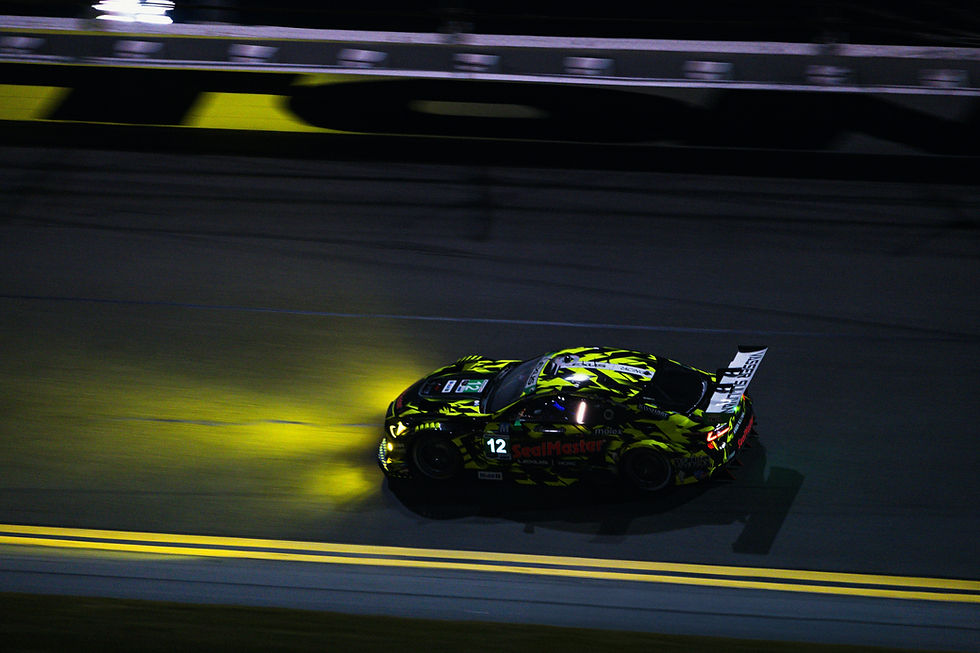
Endurance Academy
Learn the skills that make endurance racers faster, smarter, and more consistent. From multiclass traffic and racecraft to fuel strategy, tire management, driver swaps, and pit strategy, the First Sector Endurance Academy breaks down the fundamentals of going the distance.
Coming Soon....
SNEAK PEAK
From Beginner, Intermediate to Expert. First Sectors Endurance Academy will teach you Sim Racing basics to professional level micro adjustments, to gain a tenth on a lap
Here is some categories you can expect from our Endurance Academy below...
Traffic management, passing, awareness
Fuel windows, saving fuel, undercuts
Wear, temperatures, double stinting
Team racing, stint planning, preparation
Consistency, overtaking, defending, surviving
Quick Beginners Guide
Sim Racing Basics



.jpeg)

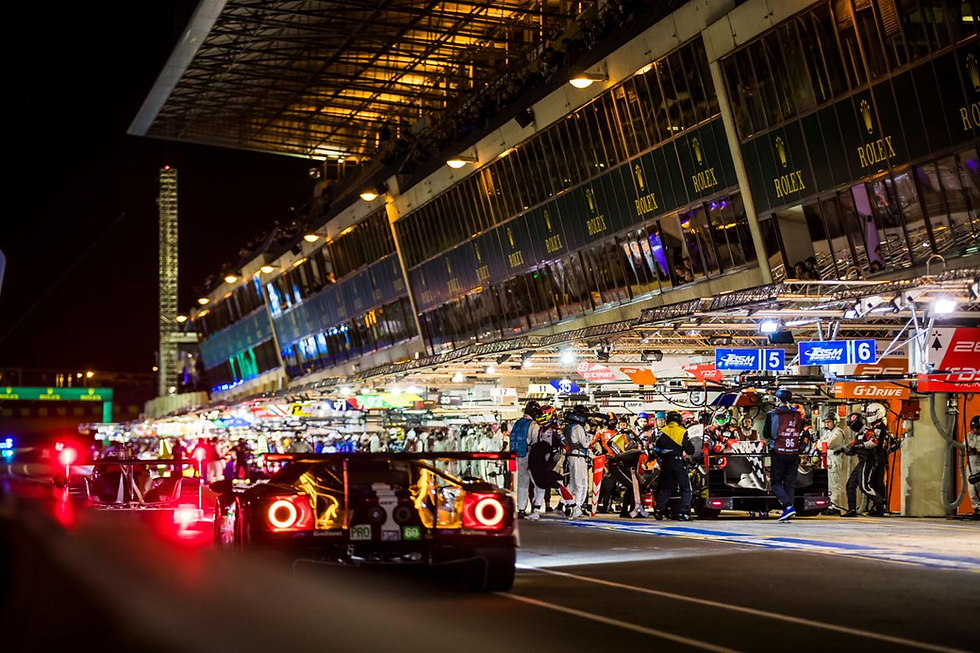
YOUR FIRST STINT STARTS HERE.
Endurance sim racing is about much more than setting fast laps. Success comes from combining consistent pace, clean racecraft, traffic management, strategy and concentration over long periods of racing.
You don't need to master everything before entering your first endurance event. Build the fundamentals first, finish races, and let the speed come naturally.
01 // START WITH GT3
GT3 is one of the best places to begin endurance sim racing. The cars are fast enough to be challenging but generally more approachable than prototypes, making them ideal for learning the fundamentals.
A GT3 will teach you threshold braking, trail braking, throttle control, tire management and racecraft without the extreme speed and closing rates of a prototype.
Try sticking with one GT3 car while you're learning. Constantly changing cars makes it harder to understand how your driving is improving.
Your first objective isn't finding the fastest GT3.
It's becoming comfortable enough with one car that you can focus on racing instead of controlling it.
02 // CONSISTENCY BEATS HOT LAPS
A great qualifying lap doesn't mean much if you can't repeat it.
Instead of constantly chasing your personal best, find a pace you can comfortably maintain throughout a stint. If your absolute maximum is a 2:00.0 but you can consistently run clean 2:01s, those 2:01s may be much more valuable during an endurance race.
Consistency also means controlling mistakes.
A spin, off-track or damaged car can erase dozens of laps worth of small pace gains.
Start practicing in 10–15 lap runs without restarting after mistakes. Look at the difference between your normal laps rather than only your fastest one.
The goal is usable speed—not one perfect lap.
03 // LEARN MULTICLASS TRAFFIC
Multiclass racing is one of the biggest differences between endurance racing and traditional sprint racing.
GT3 cars can share the circuit with much faster prototypes, creating large differences in braking performance, cornering speed and acceleration.
If you're driving the slower car, be predictable. Hold your expected line and avoid sudden movements intended to help the faster driver.
If you're driving the faster car, understand that it's your responsibility to judge the closing speed and find a safe opportunity to pass.
You'll also learn that every pass doesn't need to happen immediately.
Sometimes waiting one corner creates a much cleaner encounter and costs both drivers less time.
04 // THINK IN STINTS
Sprint racing encourages you to think lap by lap.
Endurance racing requires you to think much further ahead.
You'll need to consider:
Fuel consumption. How long can you stay out?
Tire wear. Will aggressive driving hurt you later?
Traffic. Where are you likely to encounter other classes?
Pit stops. When should you stop, and what does the car need?
Driver changes. In team events, when should each driver take over?
The fastest strategy isn't always about producing the fastest individual laps.
Sometimes protecting the tires, saving a little fuel or avoiding a risky battle now puts you in a stronger position later.
Start thinking about what your race needs—not just what your current lap needs.
05 // SURVIVE FIRST, ATTACK SECOND
Endurance races give you something sprint races don't:
Time.
You don't need to fight every car immediately or attack every available gap.
During the opening laps, give yourself additional braking margin, expect drivers around you to make mistakes and avoid getting trapped in unnecessary battles.
As the race develops, start identifying who you're actually racing.
A driver on a different strategy—or even in another class—may not be worth fighting at all.
You can't win an endurance race in the first corner—but you can lose one there.
Protect the car first.
You'll have plenty of opportunities to attack later.
06 // PRACTICE THE RIGHT WAY
Don't prepare for an endurance race by running endless qualifying laps.
Your practice should resemble the race itself.
Run the car with race fuel instead of constantly using low fuel.
Complete long uninterrupted stints.
Practice pit entry and pit exit until neither feels unusual.
Spend time around multiclass traffic.
Practice night driving and wet conditions when they're relevant to the event.
Most importantly, learn how the car changes throughout a stint. Fuel burns away, tires change, track conditions evolve and your concentration can begin to fade.
A driver who's prepared for those changes will usually be much more comfortable when race day arrives.
FIRST SECTOR // KEY TAKEAWAY
YOU DON'T NEED TO BE THE FASTEST DRIVER TO BECOME A GOOD ENDURANCE RACER.
Start with a car you understand.
Build repeatable pace.
Learn how to manage traffic.
Think beyond the current lap.
Practice like you intend to race.
And above everything else:
Finish races. Speed will come.
FIRST SECTOR // SIM RACING // BEGINNER GUIDE 001


Shaping Tomorrow's Racers
Our Roster & Partners
Under construction........