
Why Are There Multiple Classes in Endurance Racing?
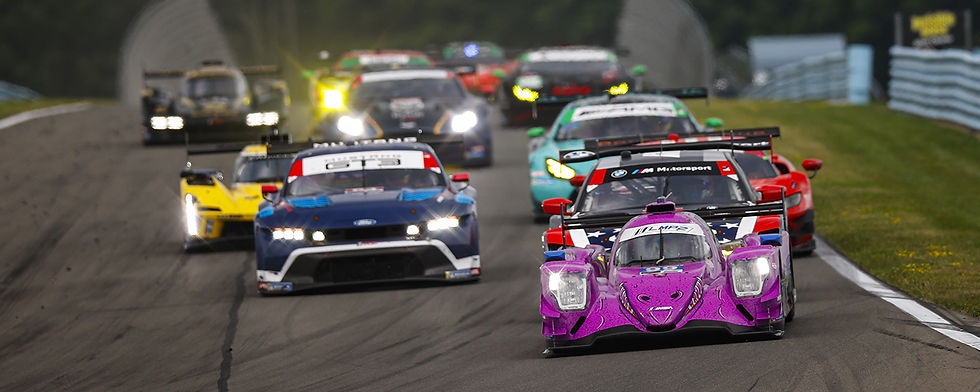
Lets talk about Why Are There Multiple Classes in Endurance Racing?
One of the first things new fans notice when watching endurance racing is that not every car looks the same.
Some cars are sleek, futuristic prototypes.
Others look like high-performance sports cars you might recognize from the road.
Yet somehow...
They're all racing at the same time.
So why does endurance racing have multiple classes instead of one field of identical cars?
The answer is simple:
Multiple classes create more competition, more strategy, and more stories than a single-category race ever could.
It's one of the defining features that makes endurance racing unlike any other form of motorsport.
What Is Multi-Class Racing?
In championships like the IMSA WeatherTech SportsCar Championship and the FIA World Endurance Championship (WEC), several categories of cars compete on the track simultaneously.
Each class races against cars with similar performance, while sharing the circuit with faster and slower categories.
That means one race contains several races happening at once.
For example, in WEC you'll see Hypercars battling for the overall victory while LMGT3 cars fight for class honors. In IMSA, classes such as GTP, LMP2, GTD PRO, and GTD each have their own championship battles.
The overall winner crosses the finish line first.
But every class celebrates its own winner.
Why Doesn't Everyone Race the Same Car?
It comes down to variety.
Manufacturers have different goals, budgets, and technologies.
Some want to build cutting-edge prototype race cars capable of winning overall.
Others want to race production-based GT cars that showcase models customers can actually buy.
By creating multiple classes, endurance racing allows different types of manufacturers and teams to compete in the same event while remaining competitive within their own category.
This variety is one of the reasons endurance racing attracts such a diverse grid every season.
Traffic Is Part of the Challenge
Multi-class racing isn't just about different cars.
It's about how those cars interact.
Throughout a race, faster prototype cars constantly catch slower GT cars.
Prototype drivers must find safe opportunities to overtake without losing momentum.
GT drivers must remain predictable while continuing to battle competitors in their own class.

Managing this traffic is one of the most difficult skills in endurance racing.
A driver who handles traffic well can gain seconds every lap.
A driver who misjudges one overtake can lose a race—or end it entirely.
More Than One Winner
Another reason fans love multi-class racing is that there isn't just one battle to watch.
While the leaders fight for the overall victory, another class may be separated by only a few tenths of a second.
A dramatic fight for a GT class win can be just as exciting as the race for first overall.
It means there's almost always action somewhere on the circuit.
Whether you're cheering for a prototype or a GT car, your favorite team has something meaningful to fight for.
Why Fans Love It
At first, multi-class racing can seem confusing.
But once you understand how it works, it becomes one of the sport's greatest strengths.
Instead of following a single storyline, you're watching several unfold at the same time.
Different strategies.
Different cars.
Different championships.
One race.
That constant interaction creates a level of unpredictability that few other forms of motorsport can match.

First Sector Verdict
Multiple classes aren't there to make endurance racing more complicated.
They're there to make it more exciting.
They allow manufacturers with different philosophies to compete together, create incredible traffic battles, and ensure there is always another story developing somewhere on the track.
Once you understand multi-class racing, you stop asking why there are different classes.
You start appreciating why endurance racing wouldn't be the same without them.


Comments